
From The Mail Online
Town hall snoopers obtained the details of more than 270,000 motorists from the DVLA database last year in a bid to trap people for 'environmental crimes'.
The officials wanted to link car owners via their number plates to offences such as littering, dog fouling and noisy stereos.
Critics say the scale of the inquiries is a 'terrifying' example of the lurch towards a Big Brother society.
Councils were originally given 24-hour access to the DVLA's huge database, via a computer link called the Web Enabled Enquiry System (WEES), to make it easier to trace the owners of abandoned cars.
But a document produced by the Department for Environment, Food and Rural Affairs reveals this access has recently been 'enhanced' to allow authorised council staff to police environmental crimes.
The DVLA said WEES was accessed last year by a total of 271,563 by local councils - at the rate of more than 700 checks every day.
North Cornwall District Council used the system in an attempt to trace somebody suspected of horse fouling. Test Valley Council in Hampshire used it in a graffiti inquiry, while Chorley Council in Cheshire used it to check on the owner of a car leaking petrol in a car park.
Bexley Council in London checked the system 44 times last year to trace people illegally advertising cars for sale in the street. Other councils have used the system in an attempt to trace the owners of out of control dogs, bogus callers and benefit cheats.
In some cases, officials use the system to obtain the details of people who have been spotted by council staff committing an offence.
But it can also be used to check tips from members of the public, who take down a car registration after spotting litter being thrown from the window, or an owner letting a dog out of the car and not clearing up any mess.
Shadow Local Government Secretary Eric Pickles said: 'State intrusion is becoming the norm not the exception as we witness the slow death of our privacy.
'We never condone breaking the law and recognise the need for tough measures to tackle the wave of violent crime sweeping the country. What we don’t need is the systematic abuse of state powers by town halls - there must be a proportionate use of powers that fit the offence'. [must include]
Phil Booth, of the NO2ID campaign, said of the DVLA database: ' This is incredible and terrifying. What we are seeing are powers which are brought in for one purpose being abused time and again for relatively minor offences.
'This is massively disproportionate. I don't think it is reasonable or proportionate to expose the names of every driver in the country to potentially hundreds or thousands of people.'
Spy cameras: Big Brother is watching you
Many of the checks are still made in an attempt to trace the owners of abandoned vehicles.
But the legislation is now being widely used in attempts to track down those responsible for offences in the Clean Neighbourhoods and Environment Act - including fly-tipping, dog fouling, littering, illegal street repairs, noisy car alarms and loud car stereos.
The Defra document says: 'Originally conceived to help authorities better deal with abandoned vehicles it has now been enhanced to allow enquires to assist the
investigation of other environmental offences, where a vehicle is involved.'
'The system can be used to get vehicle keeper details where a vehicle is abandoned or causing a nuisance or used in connection with fly-tipping, littering, dog-fouling or fly-posting.
'Where a vehicle is causing a nuisance this includes those that are being repaired or sold on the road. The definition of fly-tipping also includes litter that is thrown from a car.
'In the case of dog-fouling, if the owner of a dog fails to clean up after it has fouled, and then returns to the car, the vehicle keeper details can be requested through WEES so as to help with any investigation.'
Those who have been trapped by the snooping tactic include dog owner Barry Barnes, of Wick, in West Sussex, who was fined £200 at court last month for failing to clear up after his pets.
He was spotted by a dog warden but refused to give his details and was tracked down by Arun Council staff using by running a check on his car registration.
It is the latest example of the lengths councils are willing to go to in order to trap even the most minor offenders.
In June, the Daily Mail revealed how local authority snoopers used had anti-terror powers to delve into the phone and e-mail records of thousands of people.
They deployed the tactic to check for evidence of dog smuggling, storing petrol without permission and even to trace a suspected bogus faith healer.
There has also been past controversy over the use of the information held by the DVLA database, which all vehicle owners are legally obliged to supply with name, address and driving licence details.
The government was forced to tighten the data access rules after the DVLA revealed it made £6.3m from selling access to the names and addresses of motorists to private sector companies such as wheel clampers, bailiffs and debt collection agencies.
Defra stresses that a car number plate alone will not be enough to hand out a fine, or secure a conviction. Other evidence, or an admission of guilt, is also likely to be necessary.
Sir Simon Milton, chairman of the Local Government Association, said: ' Councils use the powers to respond to residents’ complaints about fly tippers, rogue traders and those defrauding the council tax or housing benefit system.
'Time and again, these are just the type of crimes that residents tell us that they want to see tackled. Without these powers, councils would not be able to provide the level of reassurance and protection local people demand and deserve.
'Surveillance powers are never to be used lightly and it is important that councils use them when appropriate. It is not right that councils are being tarred with accusations of snooping to investigate local crime when they are doing nothing of the sort.
'Equally it is important that they use these powers carefully and appropriately and we will be working with councils to help enable this.'
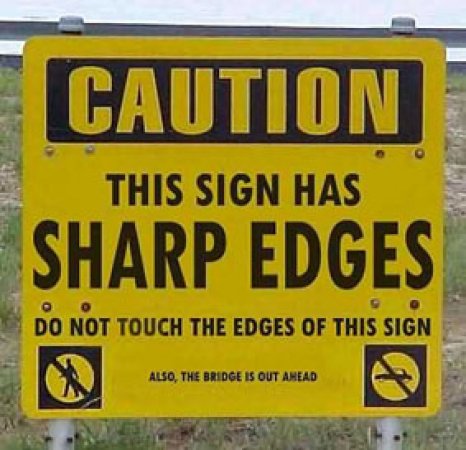
DESIGNED BY THE DVLA BY ANY CHANCE??
Monday, 4 August 2008

DVLA SWANSEA PROBLEMS - PATHETIC STAFF
After all the problems I had with the DVLA I would have at least expected them to make sure my log book was in the post first class - but no!!
It's Monday now and still no log book. The department is on the verge of imploding, rotten to the core. Pathetic state of affairs.
It's Monday now and still no log book. The department is on the verge of imploding, rotten to the core. Pathetic state of affairs.
Friday, 1 August 2008
DVLA sick leave amazingly high - Staff Demoralised?
MPs have criticised "amazingly high" levels of sick leave among staff at the DVLA and the Driving Standards Agency.
On average, employees had three weeks a year sick leave, although that figure was bumped up by "a few people on long-term sickness," MPs said.
Public accounts committee chairman Edward Leigh said it was surprising the agencies could "function adequately".
The Department for Transport said it was improving procedures to help cut absences and address underlying causes.
The committee's report follows a critical report by the National Audit Office published in June.
Stress
The MPs' report said that overall sickness leave at the DfT and its seven agencies averaged 10.4 working days per full time employee in 2005 - which they said cost the taxpayer £24m.
While sick leave rates at the department itself and four of its agencies were below average - at the DVLA and DSA, which together employ more than 50% of all DfT staff - they were "significantly higher".
The fact that both agencies seem to function adequately despite this amazingly high rate of absence is a matter for surprise, to say the least
Edward Leigh
Committee chairman
They said the DfT had only recently made tackling sick leave levels a priority, but said 75% of staff at those agencies had taken 10 days or less.
The main reasons for absence were mental health and stress, particularly among those on long-term sick leave. The Swansea-based DVLA said the most common reasons for stress were not related to work.
The report said there was a link between high levels of sick leave and relatively low-paid, repetitive, administrative jobs. It said measures had been taken to strengthen management, which was particularly important in those areas.
Minimising absences
Mr Leigh, a Conservative MP, said: "Sick leave seems to be a way of life in two large agencies of the Department for Transport, the Driving Standards Agency and the DVLA.
"On average, each employee is off sick for nearly three weeks each year. The fact that both agencies seem to function adequately despite this amazingly high rate of absence is a matter for surprise, to say the least."
But a spokesman for the Department for Transport said: "Sickness rates in five of the eight DfT bodies are at or below the rates in comparable organisations in the public and private sectors.
"Where rates are higher we are committed to making improvements, supporting those who are genuinely sick while also addressing any underlying causes.
"We are also improving procedures to help minimise absences and allow staff to return to work as quickly as possible, for example through better management training."
On average, employees had three weeks a year sick leave, although that figure was bumped up by "a few people on long-term sickness," MPs said.
Public accounts committee chairman Edward Leigh said it was surprising the agencies could "function adequately".
The Department for Transport said it was improving procedures to help cut absences and address underlying causes.
The committee's report follows a critical report by the National Audit Office published in June.
Stress
The MPs' report said that overall sickness leave at the DfT and its seven agencies averaged 10.4 working days per full time employee in 2005 - which they said cost the taxpayer £24m.
While sick leave rates at the department itself and four of its agencies were below average - at the DVLA and DSA, which together employ more than 50% of all DfT staff - they were "significantly higher".
The fact that both agencies seem to function adequately despite this amazingly high rate of absence is a matter for surprise, to say the least
Edward Leigh
Committee chairman
They said the DfT had only recently made tackling sick leave levels a priority, but said 75% of staff at those agencies had taken 10 days or less.
The main reasons for absence were mental health and stress, particularly among those on long-term sick leave. The Swansea-based DVLA said the most common reasons for stress were not related to work.
The report said there was a link between high levels of sick leave and relatively low-paid, repetitive, administrative jobs. It said measures had been taken to strengthen management, which was particularly important in those areas.
Minimising absences
Mr Leigh, a Conservative MP, said: "Sick leave seems to be a way of life in two large agencies of the Department for Transport, the Driving Standards Agency and the DVLA.
"On average, each employee is off sick for nearly three weeks each year. The fact that both agencies seem to function adequately despite this amazingly high rate of absence is a matter for surprise, to say the least."
But a spokesman for the Department for Transport said: "Sickness rates in five of the eight DfT bodies are at or below the rates in comparable organisations in the public and private sectors.
"Where rates are higher we are committed to making improvements, supporting those who are genuinely sick while also addressing any underlying causes.
"We are also improving procedures to help minimise absences and allow staff to return to work as quickly as possible, for example through better management training."
MORE DVLA STAFF INCOMPETENCE
Drivers sent wrong DVLA details
The Driver and Vehicle Licensing Agency (DVLA) has admitted it sent confidential details to the wrong motorists by mistake.
The Swansea-based agency has confirmed at least 100 sensitive documents were sent to the wrong addresses.
The DVLA had sent out 1,215 questionnaires including drivers' names, addresses, birth dates, licence numbers and motoring offences records.
The agency said at least 100 people who have been affected have got in touch.
Officials said they did not know exactly how many people had been affected but a dedicated telephone line had been set up.
The DVLA admitted that "human error" had led to the "isolated incident".
It said all 1,215 drivers who were sent the questionnaires were contacted to advise them of the error, apologise and discuss its implications.
The Driver and Vehicle Licensing Agency (DVLA) has admitted it sent confidential details to the wrong motorists by mistake.
The Swansea-based agency has confirmed at least 100 sensitive documents were sent to the wrong addresses.
The DVLA had sent out 1,215 questionnaires including drivers' names, addresses, birth dates, licence numbers and motoring offences records.
The agency said at least 100 people who have been affected have got in touch.
Officials said they did not know exactly how many people had been affected but a dedicated telephone line had been set up.
The DVLA admitted that "human error" had led to the "isolated incident".
It said all 1,215 drivers who were sent the questionnaires were contacted to advise them of the error, apologise and discuss its implications.
Aggregator calls for tough action as cost of uninsured drivers revealed
UK drivers are paying, on average, £31 a year more on their car insurance in order to cover for people who are uninsured, equating to more than £500m according to the Motor Insurance Bureau figures. This figure doesn’t take into account the financial costs surrounding accidents caused by uninsured drivers.
In addition, You Gov research released today by Comparethemarket revealed 87% of motorists feel that the government doesn’t do enough to prevent people driving without insurance and are calling for tougher penalties.
At present, the lack of clear and concise penalties for drivers flouting the law serves as little deterrent to would-be illegal motorists. In fact, the average fine for getting caught driving without insurance in the UK is just £250, which 79% of respondents felt was too low.
Aside from the incremental price increases for a policy, 68% of motorists involved in an accident with an uninsured driver had to incur liability and either pay for the incident themselves (19%) or claim on their own insurance (49%), potentially jeopardising no claims bonuses that may have been accrued. From the survey sample, more than one in 10 respondents (12%) had been involved in an accident with an uninsured driver.
“Comparethemarket is keen to get consumers the best possible deal on their motor insurance. One way the government can help with this objective is to take action to reduce the number of illegal drivers on Britain’s roads and that has to be through more severe penalties. If the number of illegal drivers decreases then the industry will have more flexibility in pricing policies for law abiding motorists,” said Jeremy Moll, head of insurance at Comparethemarket.
“At present motor policies are hit by the knock on effect of uninsured drivers and the financial implications they create; so any steps to deter uninsured drivers would be a move in the right direction."
"It is high time the government took decisive action on this problem. The average penalty for an uninsured driving offence is a fraction of the cost of a year’s car insurance, incentivising law-breaking," added Theresa Villiers, Shadow Secretary of State for Transport. "That cannot be right, and I hope Ruth Kelly will pay attention to the 87% of motorists who have told this survey that she should do something about it. Motorists have had enough of footing the bill for uninsured drivers.”
Ashton West, chief executive for the Motor Insurers' Bureau, added: “It’s clear that any deterrent to the problem of uninsured drivers in the UK would be welcome. It’s a major problem in this country and it’s an unfortunate consequence that legal drivers have to bear the cost of this type of crime. Awareness of the potential penalties needs to be increased so it makes drivers think twice before taking to the roads uninsured.”
The research also identified some regional variances including: Londoners were most likely to pay for damage caused by an uninsured driver themselves, with 46% choosing to foot the bill; almost six in 10 northerners (59%) have had to pay for damages themselves when involved in an accident with an uninsured driver, while in the Midlands this falls to 46%.
In addition, You Gov research released today by Comparethemarket revealed 87% of motorists feel that the government doesn’t do enough to prevent people driving without insurance and are calling for tougher penalties.
At present, the lack of clear and concise penalties for drivers flouting the law serves as little deterrent to would-be illegal motorists. In fact, the average fine for getting caught driving without insurance in the UK is just £250, which 79% of respondents felt was too low.
Aside from the incremental price increases for a policy, 68% of motorists involved in an accident with an uninsured driver had to incur liability and either pay for the incident themselves (19%) or claim on their own insurance (49%), potentially jeopardising no claims bonuses that may have been accrued. From the survey sample, more than one in 10 respondents (12%) had been involved in an accident with an uninsured driver.
“Comparethemarket is keen to get consumers the best possible deal on their motor insurance. One way the government can help with this objective is to take action to reduce the number of illegal drivers on Britain’s roads and that has to be through more severe penalties. If the number of illegal drivers decreases then the industry will have more flexibility in pricing policies for law abiding motorists,” said Jeremy Moll, head of insurance at Comparethemarket.
“At present motor policies are hit by the knock on effect of uninsured drivers and the financial implications they create; so any steps to deter uninsured drivers would be a move in the right direction."
"It is high time the government took decisive action on this problem. The average penalty for an uninsured driving offence is a fraction of the cost of a year’s car insurance, incentivising law-breaking," added Theresa Villiers, Shadow Secretary of State for Transport. "That cannot be right, and I hope Ruth Kelly will pay attention to the 87% of motorists who have told this survey that she should do something about it. Motorists have had enough of footing the bill for uninsured drivers.”
Ashton West, chief executive for the Motor Insurers' Bureau, added: “It’s clear that any deterrent to the problem of uninsured drivers in the UK would be welcome. It’s a major problem in this country and it’s an unfortunate consequence that legal drivers have to bear the cost of this type of crime. Awareness of the potential penalties needs to be increased so it makes drivers think twice before taking to the roads uninsured.”
The research also identified some regional variances including: Londoners were most likely to pay for damage caused by an uninsured driver themselves, with 46% choosing to foot the bill; almost six in 10 northerners (59%) have had to pay for damages themselves when involved in an accident with an uninsured driver, while in the Midlands this falls to 46%.
Car Clone Crime On The Rise
CAR checking body HPI are warning used car buyers to protect themselves from the growing threat of having their car cloned.
Criminals create a clone of a car by stealing the identity from another vehicle. They replace the number plates and VIN on their car with the stolen identity from a vehicle of the same make, model and colour.
HPI director Nick Lindsay says: "This has not been helped by recent news from the DVLA that suspect V5 vehicle registration documents are circulating.
"Despite this increase, many people are still unaware of the problem and even the police admit they don't know its true scale."
The Mercedes C-Class and BMW 3-Series are prime targets as are the Audi A4 and Volkswagen Golf and Passat - all of which have seen claims rise against them.
The Ford Transit and Mercedes Sprinter vans also appear in HPI's top 10 of cloned vehicles.
Criminals create a clone of a car by stealing the identity from another vehicle. They replace the number plates and VIN on their car with the stolen identity from a vehicle of the same make, model and colour.
HPI director Nick Lindsay says: "This has not been helped by recent news from the DVLA that suspect V5 vehicle registration documents are circulating.
"Despite this increase, many people are still unaware of the problem and even the police admit they don't know its true scale."
The Mercedes C-Class and BMW 3-Series are prime targets as are the Audi A4 and Volkswagen Golf and Passat - all of which have seen claims rise against them.
The Ford Transit and Mercedes Sprinter vans also appear in HPI's top 10 of cloned vehicles.
Teenager drove to exam without car insurance
BROOKENBY student Thomas Creasey drove without insurance because he had to get into Louth to sit an exam, magistrates heard.
Eighteen-year-old Creasey told the court that because of his age he was not eligible for school public transport any more.
Creasey, of Windsmoor Road, Brookenby, had earlier written to the court pleading guilty to driving in Louth on March 27, without insurance. He had a full clean driving licence.
Court clerk, Barbara Bloor told the court that Creasey had passed his driving test in February. He would attract six penalty points for the no insurance offence, which would make him subject to the new driver provisions. That would mean the DVLA would take his licence away and he would revert to being a provisional licence holder.
The alternative would be to impose a short disqualification, which meant no points would be on his licence.
Creasey, who was unrepresented, apologised for committing the offence.He told the court he needed his car to get to school to finish his A levels. He was hoping to go to university next year.
He said he had no other means of transport as he could not use the school public transport service because of his age. He lived in a remote area and it would be difficult to finish his studies if he had his licence taken off him.
Creasey said he had scrapped the other car and had a new vehicle which was fully insured.
Skegness magistrates disqualified Creasey from driving for six weeks, until September 5. He was fined £75 and ordered to pay a £15 surcharge.
Eighteen-year-old Creasey told the court that because of his age he was not eligible for school public transport any more.
Creasey, of Windsmoor Road, Brookenby, had earlier written to the court pleading guilty to driving in Louth on March 27, without insurance. He had a full clean driving licence.
Court clerk, Barbara Bloor told the court that Creasey had passed his driving test in February. He would attract six penalty points for the no insurance offence, which would make him subject to the new driver provisions. That would mean the DVLA would take his licence away and he would revert to being a provisional licence holder.
The alternative would be to impose a short disqualification, which meant no points would be on his licence.
Creasey, who was unrepresented, apologised for committing the offence.He told the court he needed his car to get to school to finish his A levels. He was hoping to go to university next year.
He said he had no other means of transport as he could not use the school public transport service because of his age. He lived in a remote area and it would be difficult to finish his studies if he had his licence taken off him.
Creasey said he had scrapped the other car and had a new vehicle which was fully insured.
Skegness magistrates disqualified Creasey from driving for six weeks, until September 5. He was fined £75 and ordered to pay a £15 surcharge.
Subscribe to:
Posts (Atom)
